
Graham Farish 372-612SF N Gauge BR Black (E) V2 60845 DCC SOUND
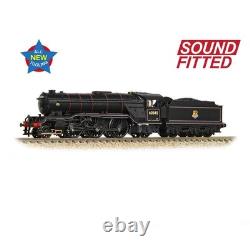

Graham Farish 372-612SF N Gauge BR Black (E) V2 60845 DCC SOUND. PLEASE REVIEW THE PHOTOGRAPHS AS WELL, ACCESSORIES/BOXES ETC WILL BE SHOWN IF THEY ARE INCLUDED. Some twenty years since the V2 was first produced in N scale by Graham Farish, this all-new model of the LNER Mixed Traffic icon is made to standards not even dreamt of twenty years ago. Often described as'the engines that won the war', these new Graham Farish models are sure to win the heart of any discerning N scale enthusiast.
Depicting one of the LNER's most successful steam locomotive designs, this masterpiece in miniature captures the look and the character of the prototype to a tee. With highly detailed mouldings and many separate parts uséd on both the locomotive and tender, including era- and prototype-specific detailing to allow accurate models of any given class member throughout their working lives, the performance of these new V2s is just as impressive as their appearance. A powerful coreless motor and flywheel is incorporated into the diecast locomotive chassis, powering the driving wheels which run in separate metal bearings. This model will provide realistic sound effects on both analogue and DCC straight out of the box! Pristine BR Lined Black Early Emblem livery.Fitted with a Zimo MS590N18 DCC Sound Decoder - See below for the function list. DETAIL VARIATIONS SPECIFIC TO THIS MODEL. Original'Monobloc' Cylinder Casting with Inside Steam Pipes.
BR Smokebox Door with Numberplate and with Higher Top Lamp Bracket. Later Style Rocker Arm Guides. Group Standard Tender with High-Front/Low-Rear Coal Space Dividers. GRAHAM FARISH LNER V2 SPECIFICATION. Separate metal bearings fitted to each driving wheel axle.Metal bearings fitted to each tender wheel axle. Gearing arranged for prototypical running speeds and haulage capabilities.
9mm (N gauge) wheels to NEM310 standards with authentic profile and detailing. Cartazzi truck with flanged wheelset (with side swing for operational necessity).Optional traction tyres fitted to the rear driving wheels (replacement wheelset without traction tyres supplied in the accessory pack). Valve gear of metal construction.
Discreet fixed locomotive to tender drawbar with integral electrical connections. Coupling pocket to NEM355 standards fitted to the front pony truck. Removable coupling pocket to NEM355 standards fitted to the tender chassis. Designed to operate on curves of second radius (263.5mm) or greater. High-precision, injection-moulded bodyshell, running plate and tender with separately fitted details parts including lower front lamp irons, lubricators, reverser and sandbox fillers.Separately applied metal components including handrails, lifting eyes, buffers and sand pipes. Water scoop, tank filler, cylinder and rear lamp iron added to the tender as separate parts. Tender fitted with metal coal-effect load. Detailed cab interior including boiler backhead controls and gauges, driver's and fireman's seats, brake standard and water scoop standard.
Hinged and posable metal fall plate between the locomotive and tender. Each model supplied with a full set of accessory parts including dummy coupling hooks, coupling bash plate, guard irons, cylinder drain cocks, and cab & tender doors. Next18 DCC decoder interface located in the tender. Speaker installed in the tender of all models for optimum sound reproduction. Zimo MS590N18 DCC Sound Decoder fitted to. Sound files produced specifically for the Graham Farish LNER V2 Class using recordings from real locomotives. Models operate on DCC and Analogue control as supplied. Authentic liveries applied to all models. Multiple paint applications employed on each model using LNER and BR specification colours.Logos, numerals and text added as appropriate using multi-stage tampo printing using authentic typefaces, logos and colours. Named locomotives are supplied with pre-fitted, fully decorated nameplates. F1 - Sound - On/Off.
F3 - Cylinder Drain Cocks. F4 - Single Whistle (Speed Related). F9 - Flange Squeal (Speed Related). F10 - Safety Valves Lifted. F12 - Water Tank Filling. F14 - Light Engine Mode. F15 - Fade All Sounds.F16 - Guard's Whistle & Response (Toot & Vocals). F17 - Automatic Wagon Buffering. F19 - Pinned Brakes (F18 must be On). F21 - Short Whistle (Toot Toot).
F22 - Long Duration Whistle. F23 - Medium Duration Whistle. F26 - Driver to Guard Instructions (5 options, selectable via CV changes). Please note that normal load running sounds and any other automatic or randomised sounds will also operate when this model is uséd on analogue control (DC) straight from the box! To haul these services a top link locomotives were required and at first, A1 and A3 Class'Pacifics' were employed along with the LNER's K3 2-6-0s, although the K3s were not suited to the high speeds required for the'Green Arrow' services. With the Pacifics required for passenger work, in 1935 the LNER announced its intention to develop a new locomotive for long-distance, mixed traffic work and the following year the first of Sir Nigel Gresley's V2 Class entered traffic. Following the convention of naming a locomotive after the named train it was principally employed on, the first V2 was named'Green Arrow'.Another convention not followed by the V2 however was that of the wheel arrangement, with the V2 using the 2-6-2'Prairie' wheel arrangement which in Great Britian was generally the preserve of tank locomotives, with other'Big Four' railway companies generally using the 4-6-0 formation for their larger mixed traffic machines. The 2-6-2 wheel arrangement accommodated a wide firebox, the same type uséd so successfully on Gresley's Pacifics and P1/P2'Mikados', and whilst visually the V2s had many similarities to the Pacifics, their similarities to the P2s were in many ways their crowning features, including 6ft 2in driving wheels, v-fronted cab, and monobloc cylinder castings. Four more locomotives emerged soon after'Green Arrow', and such was their success that a further 179 were quickly ordered. Despite the outbreak of the Second World War, construction continued of what was to become an important contributor to the war effort.
Their performances on lengthened passenger trains were notable, often hauling trains much heavier than what the class had been designed to haul, and at speed too. Such was their contribution to the British transport network between 1939 and 1945 that the V2s later became known to many as'the engines that won the war'. Many were deployed to the former Great Central routes and in Scotland and in both areas, the Class would become a stalwart until the final days of steam. Notable modifications made to the V2s during their operational years include the replacement of the monobloc casting with three separate cylinders - 71 engines were so treated between 1956 and the final withdrawals in 1966. Several types of chimneys were experimented with; one locomotive received a lipless single chimney and three others trialled separate versions including a double blast pipe borrowed from the LMS'Royal Scot' 4-6-0s. Ultimately, the Kylchap exhaust was trialled and proved successful, so much so that it was recommended the entire class should be fitted, however the onset of dieselisation meant only five locomotives received the new exhaust and associated double chimney. Withdrawals began in 1962 and in December 1966 the final V2 was taken out of service. Class pioneer'Green Arrow' was one of the first locomotives to be withdrawn, however its future had already been secured as it was selected for preservation as part of the national collection and following withdrawal,'Green Arrow' was restored at Doncaster Works.Returning to the mainline during the 1970s,'Green Arrow' went on to be a popular performer on both the national network and heritage railways until 2008 when she was withdrawn from service with a boiler failure. Today,'Green Arrow' can be found on display in the Danum Gallery, Library and Museum in its birthplace, Doncaster, where it is on loan from the National Railway Museum.
We make every effort to describe items accurately, however, nobody is perfect and on the odd occasion we may miss something. If you see anything which is incorrect in this listing, or wish to double check something, please feel free to ask a question. We include pictures of detailing packs, instructions and boxes etc if they are present and included in the price, if they are not in the photo's, you can safely assume they are not there.If in doubt, please ask and we will confirm. The photographs are also part of the listing, please review them carefully. You can do this by selecting the Request Total button during Checkout (this works only when using the E-Bay Website, it does not appear on the mobile app for phones and tablets). If you receive an item which is not in accordance with the listing, please get in touch BEFORE leaving feedback or opening a return.
Resorting to bad feedback without giving us the opportunity to address the issue helps nobody.